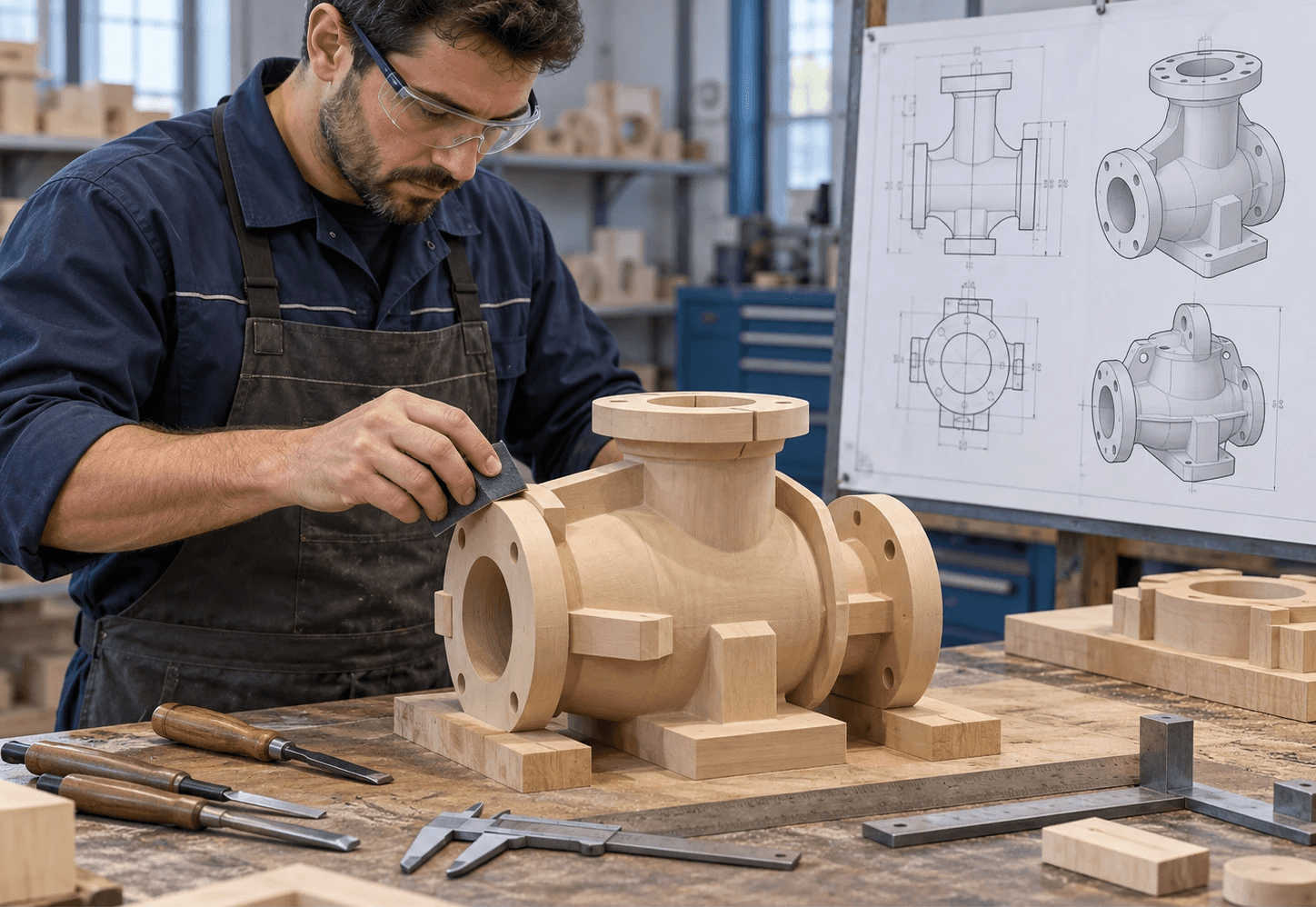
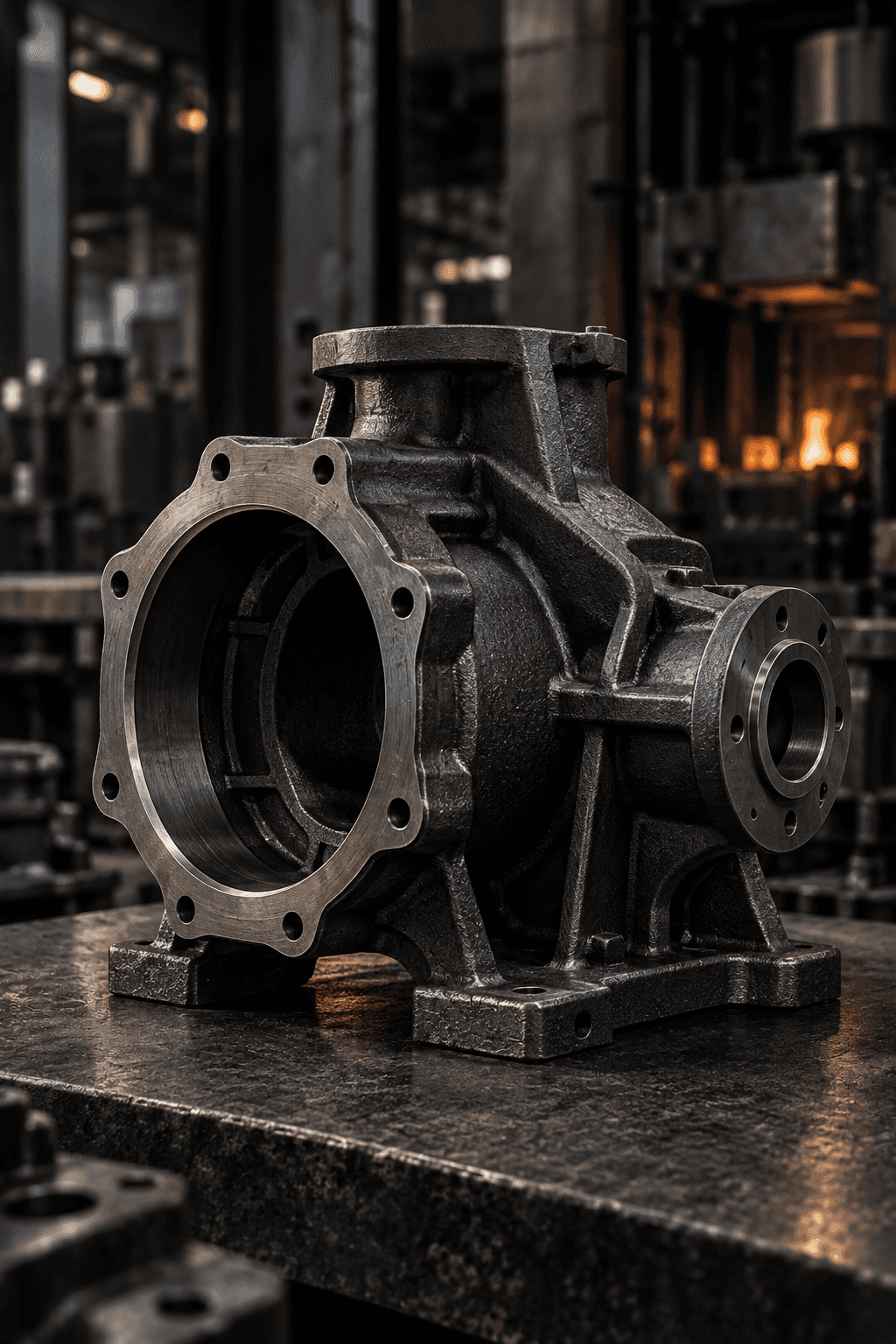
THE ADVANTAGES OF IRON CASTING
✓
✓
✓
✓
✓
MATERIALS AND TECHNICAL CAPABILITIES
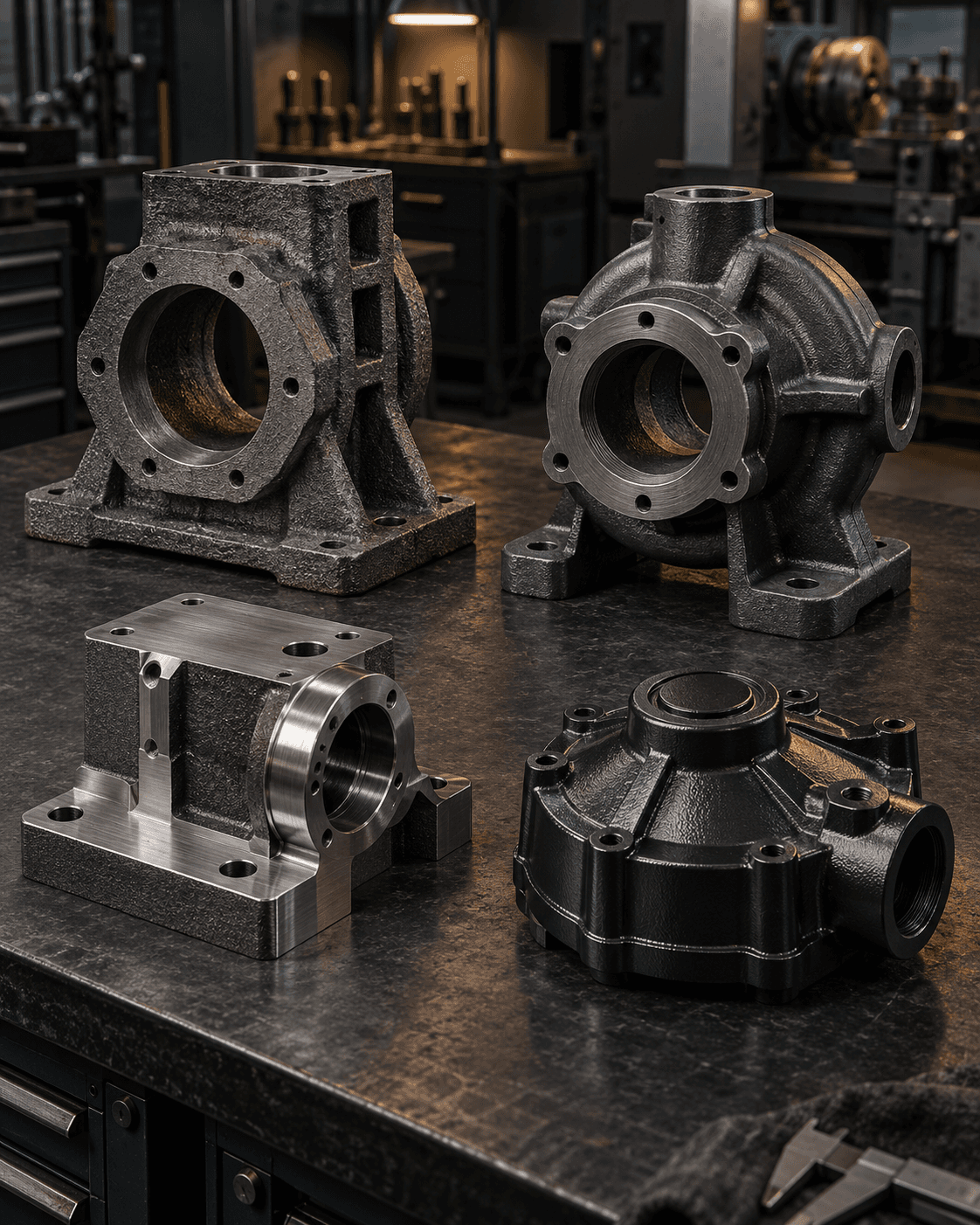
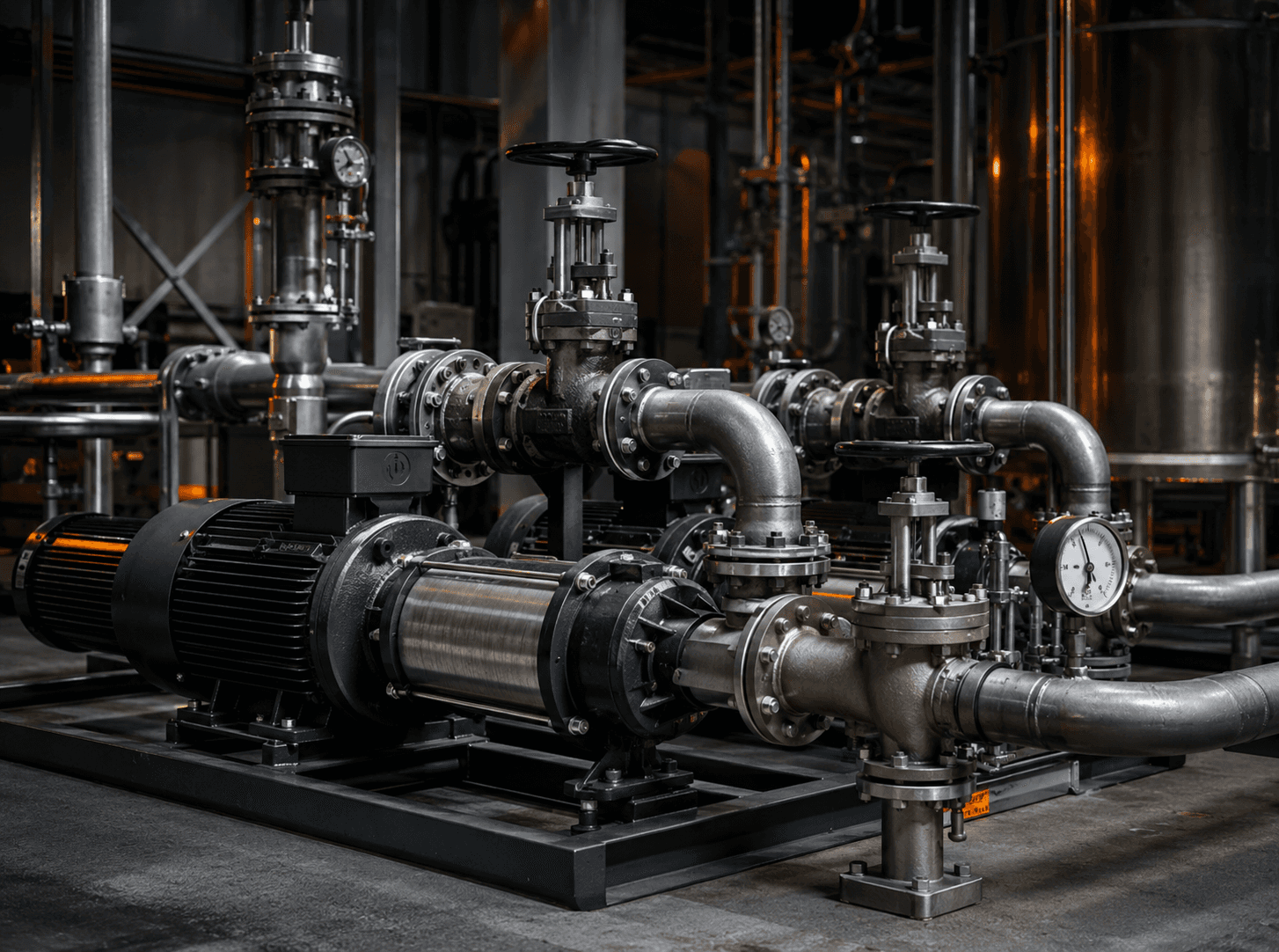
VALVES & PUMPS
How to choose between grey and ductile iron?
The choice starts from the function of the component. Grey iron contains graphite in flake form and is often used for bases and machine bodies thanks to its vibration damping properties and machinability. In ductile iron the graphite is mainly nodular, which favours ductility and mechanical strength compared with grey iron. Actual performance depends on the grade, the microstructure and the casting thickness. It is therefore necessary to specify loads, impact, temperature and operating environment. EDR assesses this data to identify the appropriate material and inspections.
Can internal cavities and channels be made?
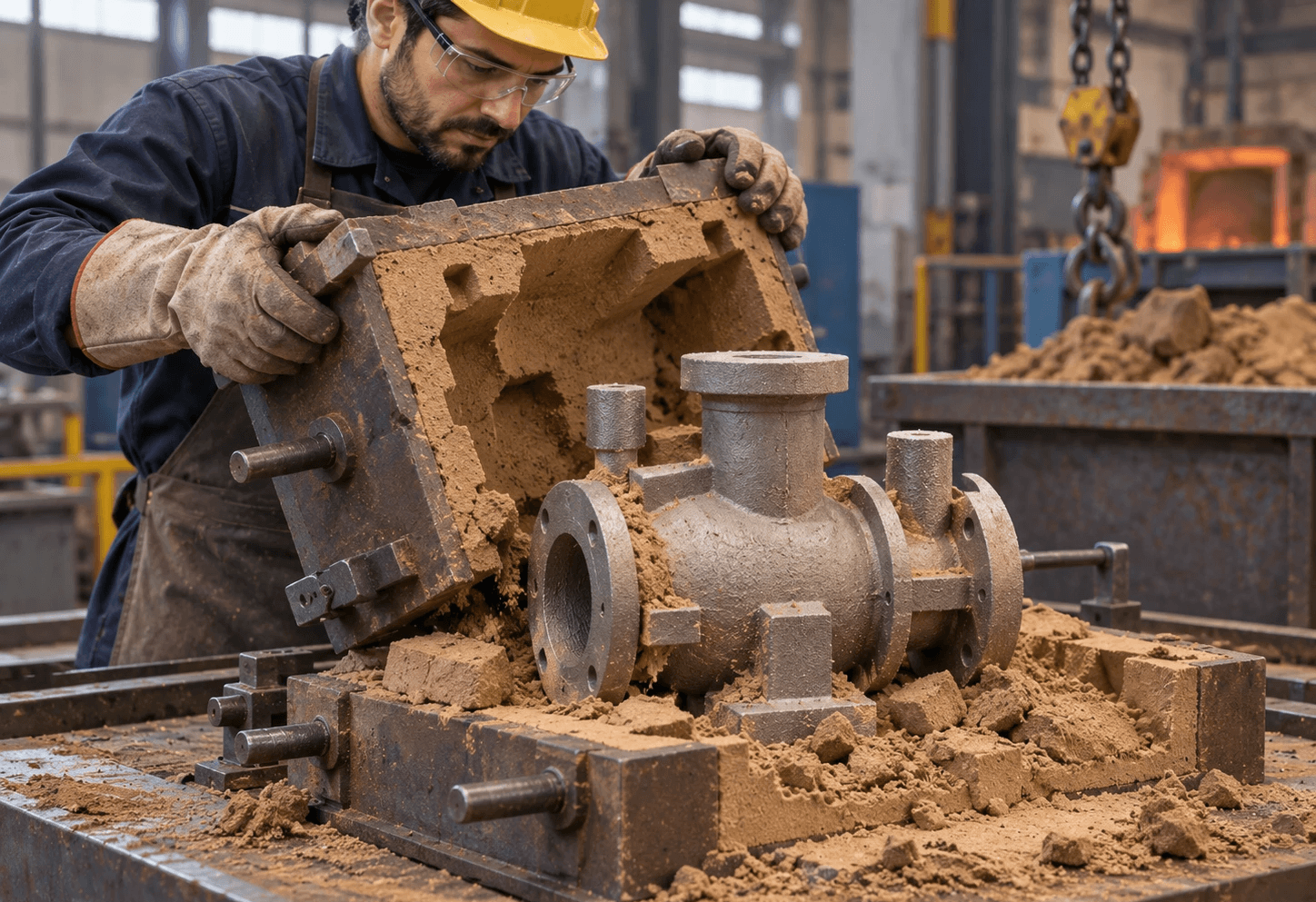
Yes, in sand casting the cores make it possible to obtain internal cavities and passages. Feasibility depends on accessibility, core support, wall thickness and the possibility of removing the sand after pouring. Abrupt section changes and massive zones require attention because they affect feeding and solidification of the casting. The design must also be assessed for machining allowances, draft and surfaces to be machined. EDR reviews the geometry with the manufacturer to define a feasible solution and the points to verify on the sample.
What accuracy is achieved after casting?
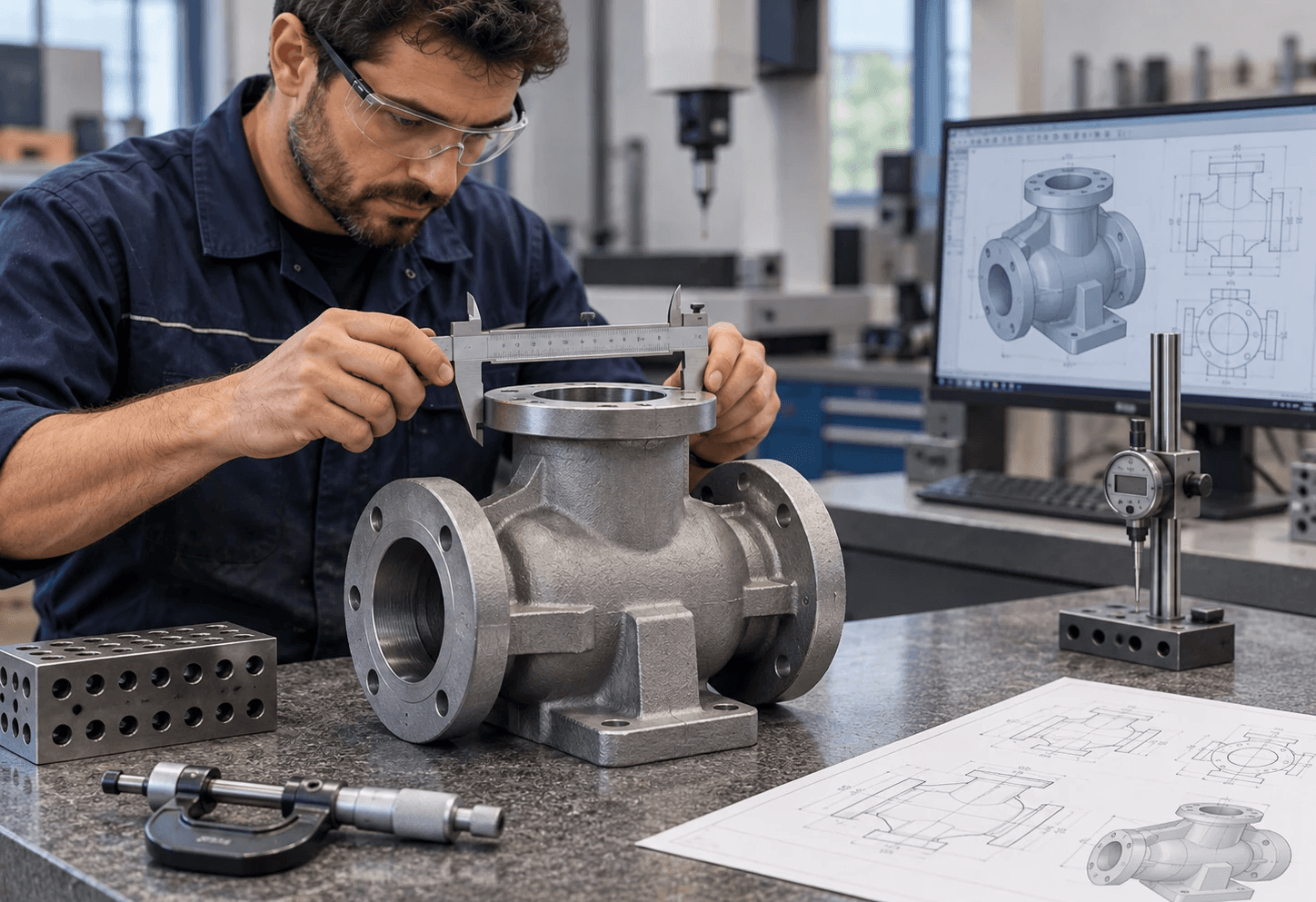
As-cast tolerances depend on the moulding system, size, geometry and material shrinkage. Machining is often needed for mating holes, seats, faces and sealing surfaces. It is useful to distinguish as-cast surfaces from finished ones on the drawing and to indicate functional datums, tolerances and roughness. EDR assesses machining allowances and the production sequence, including any stabilisation operations, to verify dimensions in the final state required by the customer.
What quantities and sizes can be evaluated?
Quantities and sizes depend on shape, material and the manufacturer's plant. The economics change between manual moulding and automated lines. Weight, overall dimensions and annual demand allow EDR to assess the solution and the supply batch.
How are the material and structure of the iron casting verified?
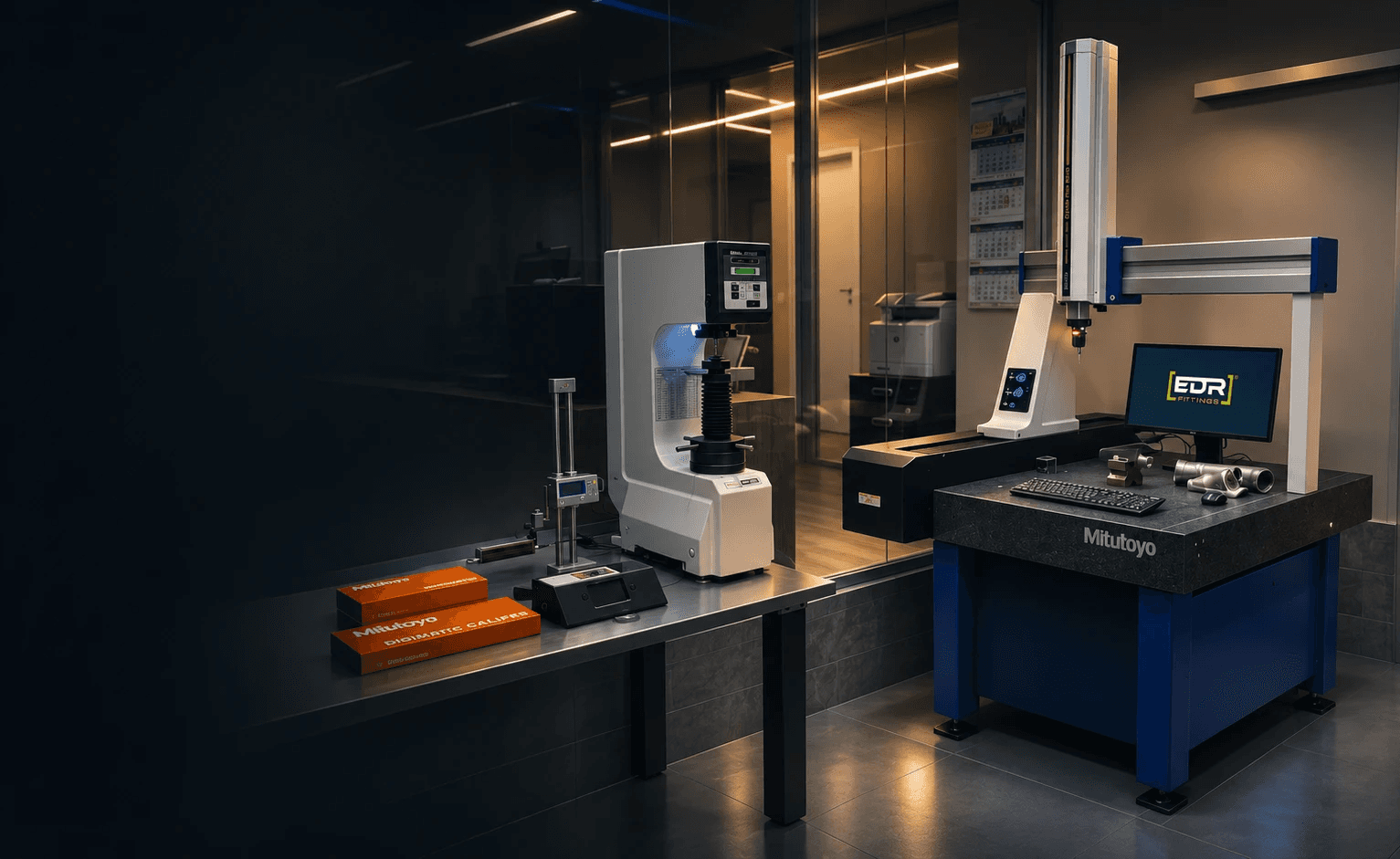
The plan may include chemical analysis, graphite verification, hardness and mechanical tests. For defects and discontinuities, inspections compatible with cast iron and the geometry are chosen. Requirements and frequency of checks must be agreed on the component.
What requirements apply to a casting working under pressure?
Suitability depends on the iron grade, design, fluid and operating conditions. Any leak or pressure tests must be defined with specific acceptance criteria. Choosing casting alone does not guarantee the tightness of the part.
How are patterns and drawings updated?
Patterns and core boxes are dedicated tooling. EDR coordinates their management at the manufacturer; a change requires checking which tooling to update and whether sampling must be repeated. Costs and lead times are assessed before the revision.
What finishes complete the iron component?
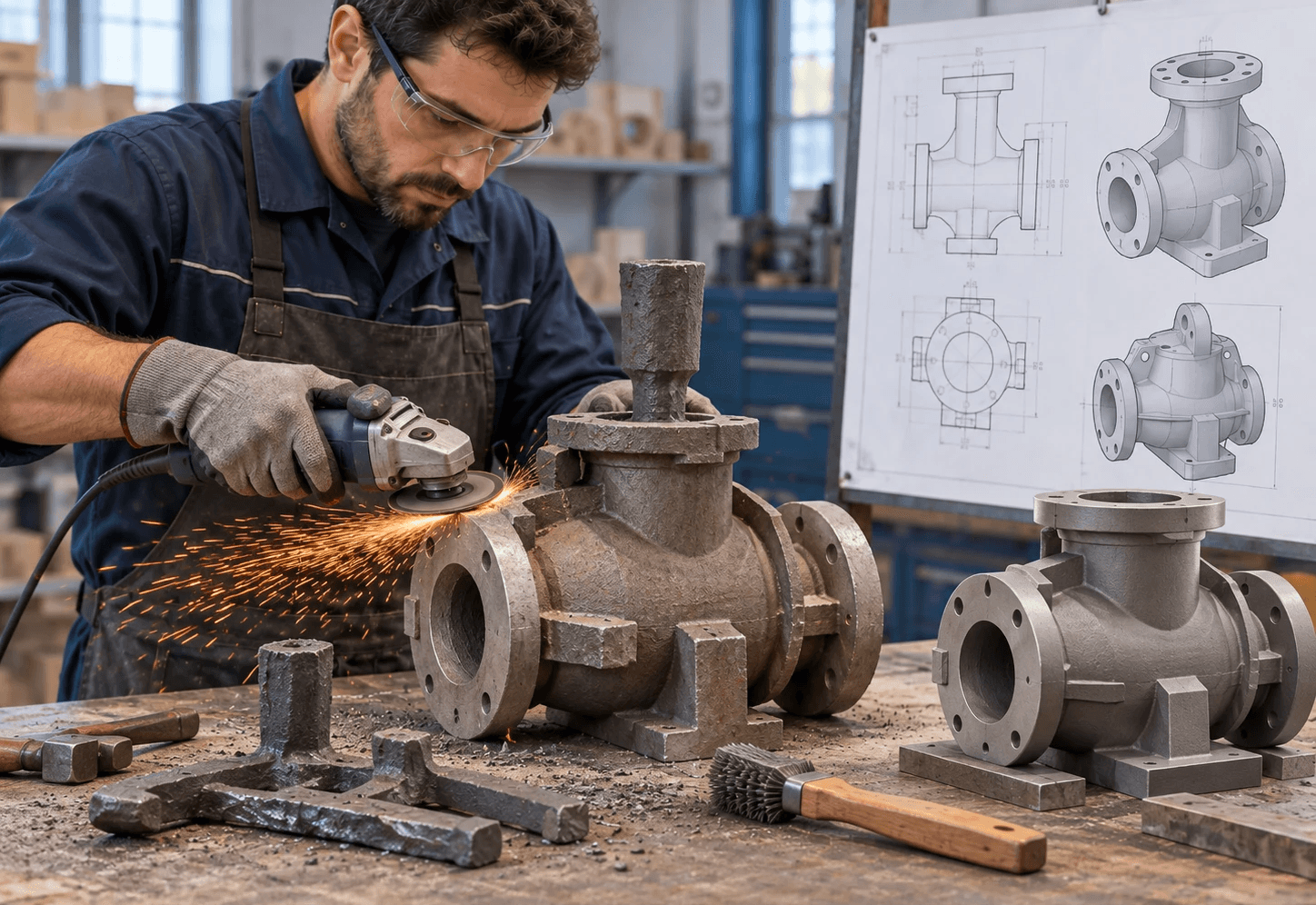
After cleaning the casting, CNC machining and surface protection suited to the environment of use may be provided. Finish, surface condition and inspections on the finished part must be specified in the request.
REQUEST A TECHNICAL ANALYSIS